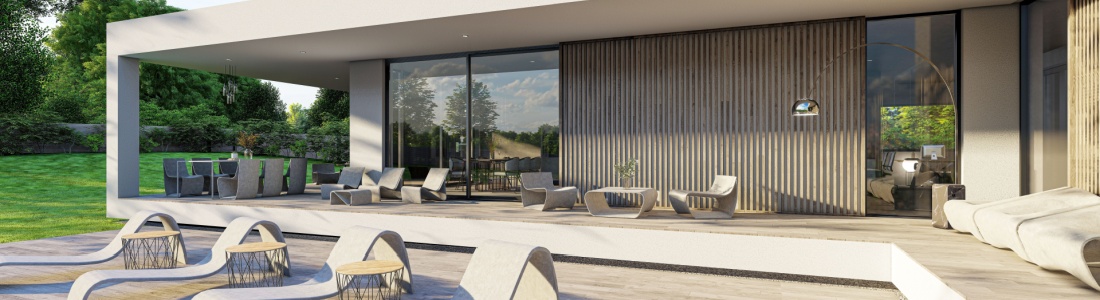
Branded residences: what they are and what to check before investing
Like many other industries, the property sector continually innovates to offer customers something different. One of the trends attracting considerable interest, in Spain and around the world, is the concept of branded residences or branded apartments.
Want to understand what this housing concept means and why it has grown? The team at Alehost explains it in this article. Read on.
What do we mean by branded residences or branded apartments?
Branded residences and branded apartments are luxury residential developments involving a partnership between a developer and a hotel operator or brand. These complexes typically stand out for:
- Being conventional residential properties managed by major hotel groups or brands.
- Involving those hotel groups or brands in the design and development of the property project.
- Offering a distinctive design.
- Providing residents with personalised, exclusive and generally luxurious experiences and services closely associated with the hotel group or brand behind them.
Where are branded residences or branded apartments located?
Branded apartments are often located in prime urban or holiday destinations and target affluent customers seeking a luxury lifestyle. The associated brand helps communicate quality and contributes to the properties’ appeal and value.
Among other examples, cities such as Madrid have the ingredients to attract the kind of interest seen in other major cities around the world.
This is partly due to the arrival of luxury hotel groups and high-end restaurants in recent years, which have increased these cities’ international appeal.
Where did the concept of branded residences originate?
Although this development model is fashionable and growing in countries such as Spain, branded residences are not new. In fact, an early residential-hotel complex of this kind opened almost 100 years ago, in 1927, on New York’s Fifth Avenue.
At the time, hotels in the United States were beginning to sell residences within their developments. The concept gained wider recognition in the 1980s, as hotel chains and prominent brands in sectors such as fashion and motoring recognised the advantages of entering property and associating their names with quality residential experiences.
How do branded residences differ from Airbnb?
A branded residence is a property and contractual model associated with a brand; Airbnb is a marketing channel. They are not equivalent categories, and a branded property may use different channels if its terms permit.
The services at a property advertised on Airbnb depend on the listing and its operator. Those at a branded residence depend on the contract, fees and benefits actually included; they should not be assumed.
The convenience offered by branded apartments can appeal to people who do not want to cook and are looking for comprehensive facilities.
For investors, part of the appeal is the support associated with the hotel group’s name. The hotel may handle many matters relating to the residence, offering a potential solution for investors unable to oversee every property closely.
Why choose a branded residence as a home or investment?
Buyers of branded residences can access a range of services and facilities at the property.
While the offering varies considerably by brand, location and development, generally basic services are included in the purchase price and annual service fee, while additional à la carte services are supplied by the residential complex or hotel management team.
Common basic services include:
- Doorman and concierge services for restaurant bookings
- Theatre, transport and activity arrangements
- Mail and parcel delivery
- Moving logistics
- Waste collection
- General maintenance of shared areas such as pools, meeting rooms, gyms and gardens
- 24-hour security
After purchasing a branded residence, buyers may also receive exclusive benefits such as the highest tier of the brand’s loyalty programme for several years, and preferential discounts on accommodation, restaurants, spa treatments and other associated services.
Recommendations for investing in branded apartments or residences
If you are considering an investment in branded apartments, keep the following recommendations in mind:
1. Research the market
Before investing in a branded apartment, it is essential to study the local property market and understand investment trends and opportunities in the area.
2. Assess potential returns
It is essential to examine a branded apartment’s potential returns before investing. Consider rental income, maintenance costs and other relevant financial factors.
3. Consider the location
Location is a key factor when investing in a branded apartment. It is therefore important to choose a desirable location and assess the potential for long-term appreciation.
4. Work with a specialist property agent
Working with an agent who specialises in branded residences can help investors identify suitable investment opportunities and navigate the purchase process.
Types of branded apartments or residences
There are four broad types of branded residence:
1. Co-located developments
The hotel group develops the branded residences on one of its properties. Residents can access some hotel services and enjoy shared facilities.
2. Residences within hotels
The properties are located inside the hotel that manages them. A single building can therefore contain hotel rooms and residences sold under this model. The advantage is that residence owners can access the hotel’s services and use areas provided for its guests.
3. Standalone residences
These properties are outside the hotel’s own premises and do not share common areas. Sometimes they are located close enough to the main complex for residents to use certain services.
4. Residences outside the hotel or brand’s own complex
These homes are built on independent sites or properties. They are associated with the luxury brand and provide exclusive experiences, but those experiences are not directly tied to the facilities of a hotel complex.
How branded residences or apartments are used
These projects are often designed for customers seeking a second home in a holiday destination. The model can benefit both sides. Owners can use the property and its exclusive services during an agreed part of the year, subject to contractual time limits, while receiving rental income when they are not occupying it.
Meanwhile, hotel groups can expand their accommodation offering at certain times of year and add a distinctive inventory with a varied range of services.
The other essential participant is, of course, the developer. Developers also see advantages: association with a leading brand can support higher prices and attract buyers with greater purchasing power, while giving the project more resources to deliver quality and attention to detail. The underlying proposition is that branded residences enhance the resident experience through convenience, comfort and sustainability.
You may also like: Sustainability for holiday lets: 9 ways to improve efficiency
Why have branded residences attracted interest in Spain?
Assess branded residences in Spain using dated information for each project, distinguishing announced developments, construction in progress, completed properties and operating schemes. These are not interchangeable measures.
Reasons put forward for the concept’s reception include:
- Growth in the luxury second-home market, encouraged by the pandemic and demand for properties offering a secure place away from other urban spaces.
- Higher construction costs as material prices increased following the war in Ukraine, prompting investors to seek greater security for their capital and returns.
- The strength of investment in Spain’s luxury housing market.
- Confidence shown by international investors in Spanish property, particularly at the luxury end of the market.
The present and future of branded residences in Spain and internationally
The Spanish property market has welcomed branded residences and apartments, suggesting continued interest in the model.
Historical growth forecasts are not equivalent to completed developments or returns for a buyer. When assessing the market, check the date, methodology, geographical scope and project pipeline of the report you use.
Compare equivalent markets and developments. An area’s commercial potential does not establish a sale or rental premium for every property and does not replace an assessment of branding costs.
For a specific investment, confirm which developments remain in progress, their permissions, operator and timetable. Do not treat targets announced for future years as accommodation already available.
See you in the next blog article.
Documents and costs an investor should review
- The brand licence agreement, its duration and termination grounds.
- Whether management is compulsory or optional, and restrictions on personal use and letting.
- Service charges, maintenance, replacements and possible additional assessments.
- Who handles marketing, pays expenses and carries occupancy risk.
- What happens if the operator changes or the development stops using the brand.
Distinguish operating returns, expected capital appreciation and personal enjoyment. Request scenarios with full costs and independent advice before committing to an investment.
Explore Alehost’s operating analysis for buildings and accommodation.